


Methanol generator sets, as an emerging power generation technology, demonstrate significant advantages in specific scenarios and within the future energy transition. Their core strengths lie primarily in four areas: environmental friendliness, fuel flexibility, strategic security, and application convenience.
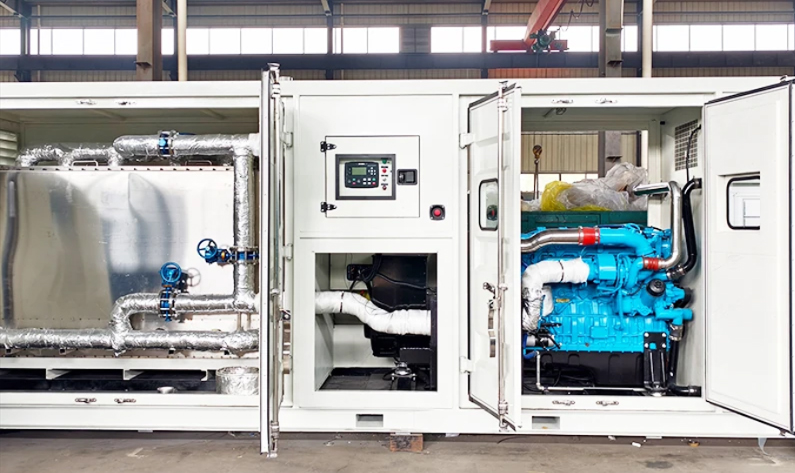
Here is a detailed breakdown of the main advantages of methanol generator sets:
I. Core Advantages
- Excellent Environmental Characteristics
- Low-Carbon / Carbon Neutral Potential: Methanol (CH₃OH) contains one carbon atom, and its combustion produces far less carbon dioxide (CO₂) than diesel (which has ~13 carbon atoms). If “green methanol” synthesized from green hydrogen (produced via electrolysis using renewable energy) and captured CO₂ is used, an almost zero-carbon emission cycle can be achieved.
- Low Pollutant Emissions: Compared to diesel generators, methanol burns cleaner, producing almost no sulfur oxides (SOx) and particulate matter (PM – soot). Emissions of nitrogen oxides (NOx) are also significantly lower. This makes it highly advantageous in areas with strict emission controls (e.g., indoors, ports, nature reserves).
- Wide Fuel Sources and Flexibility
- Multiple Production Pathways: Methanol can be produced from fossil fuels (natural gas, coal), biomass gasification (bio-methanol), or via synthesis from “green hydrogen + captured CO₂” (green methanol), offering diverse feedstock sources.
- Energy Transition Bridge: In the current phase where renewable energy is still intermittent and hydrogen infrastructure is underdeveloped, methanol serves as an ideal carrier fuel for transitioning from fossil fuels to green energy. It can be produced using existing fossil fuel infrastructure while paving the way for future green methanol.
- Superior Safety and Ease of Storage & Transport
- Liquid at Ambient Conditions: This is its greatest advantage over gases like hydrogen and natural gas. Methanol is a liquid at room temperature and pressure, requiring no high-pressure or cryogenic storage. It can directly use or easily retrofit existing gasoline/diesel storage tanks, tanker trucks, and refueling infrastructure, resulting in very low storage and transportation costs and technical barriers.
- Relatively High Safety: Although methanol is toxic and flammable, its liquid state makes leaks easier to control and manage compared to gases like natural gas (explosive), hydrogen (explosive, prone to leakage), or ammonia (toxic), making its safety easier to handle.
- Mature Technology and Retrofit Convenience
- Compatibility with Internal Combustion Engine Technology: Existing diesel generator sets can be converted to run on methanol or methanol-diesel dual fuel through relatively simple modifications (e.g., replacing the fuel injection system, adjusting the ECU, enhancing corrosion-resistant materials). The conversion cost is much lower than developing a completely new power system.
- Rapid Commercialization Potential: Leveraging the mature internal combustion engine industry chain, the R&D and mass production cycle for methanol generators can be shorter, allowing for faster market deployment.
II. Advantages in Application Scenarios
- Marine Power: With the International Maritime Organization (IMO) pushing for decarbonization, green methanol is seen as a key future marine fuel, creating a vast market for marine methanol generators/power systems.
- Off-Grid and Backup Power: In scenarios requiring reliable backup power such as mines, remote areas, and data centers, methanol’s ease of storage/transport and high stability make it a clean off-grid power solution.
- Renewable Energy Peak Shaving and Storage: Surplus renewable electricity can be converted into green methanol for storage (“Power-to-Liquid”), which can then be used to generate stable power via methanol generators when needed. This solves the intermittency issue of renewables and is an excellent long-duration energy storage solution.
- Mobile Power and Specialized Fields: In emission-sensitive environments like indoor operations or emergency rescue, low-emission methanol units are more suitable.
III. Challenges to Consider (For Completeness)
- Lower Energy Density: Methanol’s volumetric energy density is about half that of diesel, meaning a larger fuel tank is needed for the same power output.
- Toxicity: Methanol is toxic to humans and requires strict management to prevent ingestion or prolonged skin contact.
- Material Compatibility: Methanol is corrosive to certain rubbers, plastics, and metals (e.g., aluminum, zinc), requiring compatible materials to be selected.
- Infrastructure and Cost: Currently, green methanol production is small-scale and costly, and a refueling network is not fully established. However, its liquid nature makes infrastructure development far easier than for hydrogen.
- Cold Start Issues: Pure methanol has poor vaporization at low temperatures, which can cause cold start problems, often requiring auxiliary measures (e.g., preheating, blending with a small amount of diesel).
Summary
The core advantage of methanol generator sets lies in combining the storage/transport convenience of a liquid fuel with the environmental potential of a future green fuel. It is a practical bridging technology connecting traditional energy with future hydrogen/renewable energy systems.
It is particularly suitable as a clean alternative to diesel generators in scenarios with high environmental requirements, a strong reliance on storage/transport convenience, and access to methanol supply channels. Its advantages will become even more pronounced as the green methanol industry matures and costs decrease.
Post time: Dec-26-2025


