


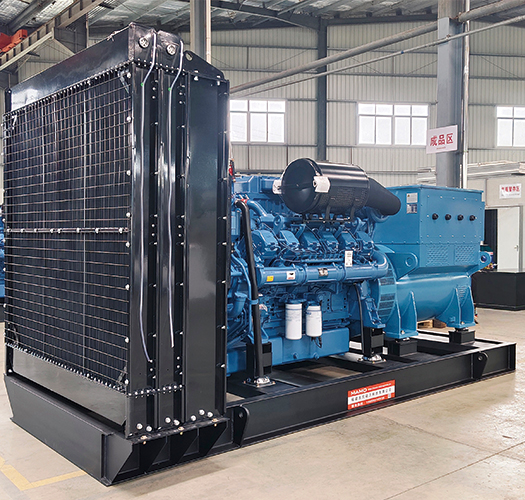
In key scenarios such as data centers, large factories, hospitals, and emergency power stations, high-voltage diesel generator sets serve as the core backup power source to ensure uninterrupted power supply and undertake the important mission of emergency power supply during power outages. The stable and safe operation of high-voltage generator sets is directly related to the reliability of the entire power system as well as the safety of personnel and equipment. Most people are familiar with the engine, generator, and control system of generator sets, yet often overlook a inconspicuous but critical supporting device — theneutral grounding resistance cabinet (referred to as the grounding resistance cabinet). Acting as a "safety buffer valve" and "fault firewall" for the generator power system, it is an indispensable core device in the grounding protection system of high-voltage diesel generator sets, silently safeguarding the operation safety of generator sets and the entire power system.
1. What is a Grounding Resistance Cabinet?
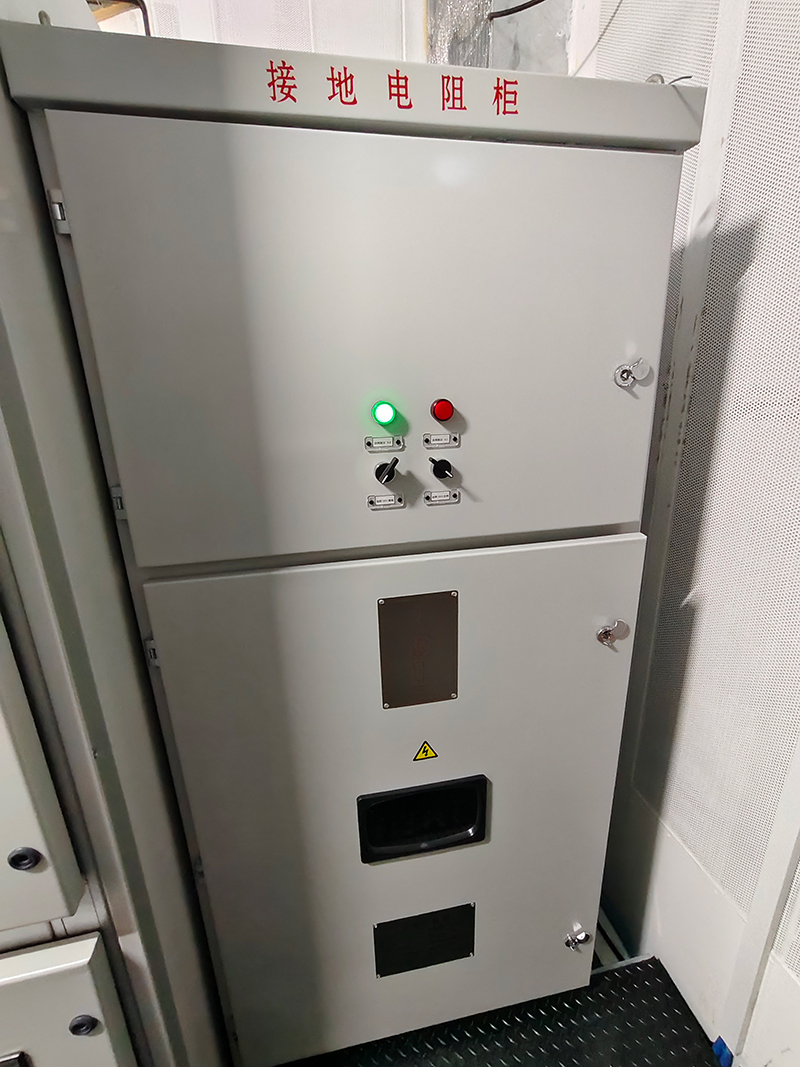
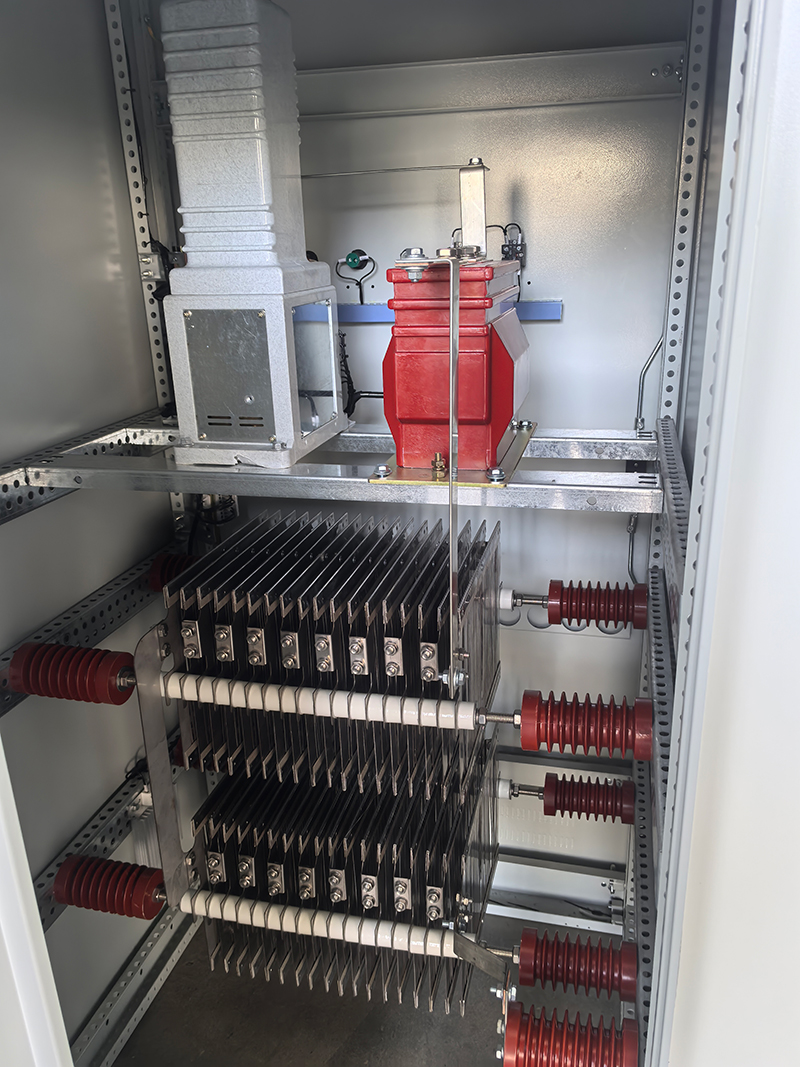
The grounding resistance cabinet of a high-voltage diesel generator set is a complete set of grounding protection equipment specially adapted for 6kV~20kV high-voltage generator sets. It is mainly composed of high-power dedicated resistors, insulating support structures, fault monitoring components, sealed cabinets and other parts. Its installation method is critical: one end is connected to the neutral point of the generator, and the other end is connected to the special factory grounding network. Essentially, it builds a controllable and safe grounding path for the neutral point of high-voltage diesel generator sets.
Different from the simple direct grounding mode of low-voltage generator sets, high-voltage diesel generator sets are strictly prohibited from direct grounding or ungrounded operation. Direct grounding will cause excessive fault current and instantly burn out the stator windings of the generator set; complete ungrounding will lead to hidden dangers such as system overvoltage and continuous arc discharge. By adopting accurately matched resistors for neutral point resistance grounding, the grounding resistance cabinet perfectly balances the operational safety and stability of high-voltage generator sets, making it a dedicated protection device adapted to the characteristics of high-voltage power systems.
2. Core Working Principle of Grounding Resistance Cabinet
During the stable and normal operation of a high-voltage generator set, the system voltage is balanced without grounding faults, and the neutral point potential is close to zero. The grounding resistance cabinet remains in a standby state with no current passing through, causing no interference or power loss to the normal power generation and transmission of the unit.
When a single-phase grounding fault (the most common fault in high-voltage systems, mostly caused by insulation aging, line wear, lightning strikes, and foreign matter contact) occurs during unit operation, the voltage of the faulty phase drops sharply, the neutral point potential rises abnormally, and capacitive grounding fault current is generated in the system. At this moment, the grounding resistance cabinet activates immediately. The resistive resistor is connected into the fault loop to change the nature and magnitude of the fault current, limit current and consume energy through resistance, suppress abnormal neutral point voltage, and provide stable fault signals for relay protection devices to realize fault early warning and disposal, fundamentally preventing fault escalation.
3. Four Core Functions of Grounding Resistance Cabinet
3.1 Accurately Limit Fault Current and Protect Core Unit Equipment
This is the most fundamental and core function of the grounding resistance cabinet. The stator winding insulation layer of high-voltage generator sets is precise and fragile. In the event of a single-phase grounding fault, without resistance current limiting, the system capacitive current will instantly soar to hundreds or even thousands of amperes. The huge fault current will generate high-temperature arcs that directly burn and break down the stator iron core and winding insulation. In mild cases, it causes insulation damage and performance degradation of the unit; in severe cases, it leads to iron core melting and winding burnout, resulting in equipment losses of tens of thousands or hundreds of thousands of yuan and extremely long maintenance cycles.
The grounding resistance cabinet can match the resistance value accurately according to the unit capacity, strictly limiting the grounding fault current within the safe tolerance range of the high-voltage generator set (generally controlled within 50A for conventional high-voltage units). It not only prevents equipment burnout caused by large current, but also retains sufficient fault current to trigger protection devices, achieving an optimal protection effect of "limiting current without blocking alarm" and greatly extending the service life of generator sets.
3.2 Suppress Arcs and Overvoltage to Avoid Systemic Accidents
In high-voltage power systems, single-phase grounding faults are highly likely to generate intermittent arcs. The repeated extinction and re-ignition of arcs will cause transient overvoltage (arc overvoltage) 3 to 5 times the phase voltage. Such instantaneous high voltage will break down the insulation structure of supporting equipment such as lines, switchgears and transformers, triggering cascading faults including multi-point short circuits and equipment explosion, which seriously endangers the safety of the entire power system.
The resistive current introduced by the grounding resistance cabinet can offset the phase difference of the system capacitive current, greatly reduce the probability of arc re-ignition, and quickly extinguish grounding fault arcs. Meanwhile, it can effectively clamp system overvoltage and control voltage fluctuations within safe thresholds, completely eliminating the risk of insulation breakdown and large-scale power outages caused by overvoltage, and ensuring the operational stability of high-voltage systems.
3.3 Optimize Relay Protection and Realize Accurate Fault Location
If the neutral point of a high-voltage unit is ungrounded, the current generated by grounding faults is extremely weak, making it difficult for relay protection devices to accurately identify fault signals. This easily leads to refusal or misoperation of protection devices, failure to detect faults in a timely manner, and escalation of minor faults into major accidents.
After the grounding resistance cabinet is put into operation, it provides stable and controllable resistive fault current for the system, enabling relay protection devices to capture fault signals quickly and clearly, and accurately judge the location and type of faults. It can realize accurate alarm and line location for slight grounding faults of the unit, and quickly trigger tripping protection to cut off the fault circuit in case of severe faults to prevent fault diffusion, greatly improving the fault disposal efficiency and intelligent protection level of the power system.
3.4 Protect Personal Safety and Build a Solid Power Safety Barrier
Under fault conditions of high-voltage generator sets, abnormal voltage and leakage current will be transmitted to equipment shells and grounding lines, bringing high risks of high-voltage electric shock to staff during inspection and maintenance. By stabilizing neutral point potential and limiting grounding leakage current, the grounding resistance cabinet effectively reduces the ground voltage of equipment shells, controls contact voltage and step voltage within human safety ranges, eliminates personal electric shock risks from the bottom of equipment design, and builds a solid safety protection barrier for operation and maintenance personnel.
4. Key Reasons for Mandatory Installation of Grounding Resistance Cabinets on High-Voltage Units
Most low-voltage generator sets do not need grounding resistance cabinets, which explains the low public awareness of this equipment. However, high-voltage diesel generator sets of 6kV and above must be equipped with grounding resistance cabinets. Low-voltage systems feature low fault current and low overvoltage hazards, and direct grounding can meet safety requirements. In contrast, high-voltage systems have high voltage levels and high energy density, and the absence of resistance grounding protection will lead to persistent risks of equipment burnout, system collapse and personal electric shock.
In first-level load scenarios such as data centers, core medical rooms, industrial production lines and emergency power stations, the power supply stability of high-voltage diesel generator sets is directly related to the normal operation of production and daily life. As a passive passive protection device, the grounding resistance cabinet requires no manual operation or external power supply, and responds automatically in real time during faults with extremely high reliability. It is an irreplaceable core device in the grounding protection system of high-voltage generator sets and also a mandatory requirement of industrial power safety specifications.
5. Conclusion: A Small Cabinet with Great Functions
As a seemingly simple supporting auxiliary device, the grounding resistance cabinet acts as an invisible safety guardian for high-voltage diesel generator sets. It does not participate in power generation or affect normal power supply, but can avoid various power safety accidents through current limiting, arc extinction, voltage stabilization, equipment protection and personal protection at critical moments of sudden faults, ensuring the long-term stable and safe operation of high-voltage generator sets.
For high-voltage diesel power generation systems, the grounding resistance cabinet is not an optional accessory, but a necessary core device that guarantees equipment service life, system stability and personal safety, serving as an important cornerstone for the safe operation of high-voltage power systems.
Post time: Jun-10-2026


